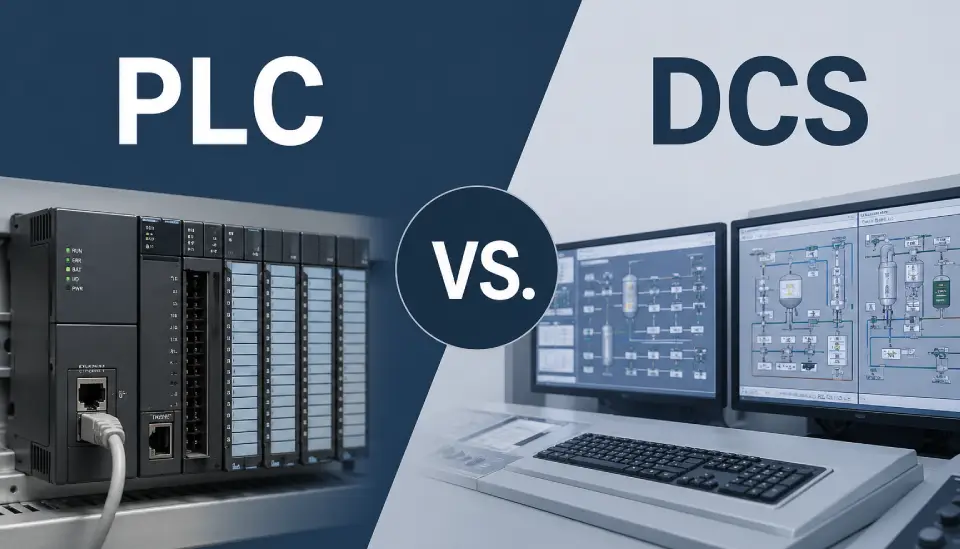

In the high-stakes arena of modern industrial production, the margin for error is becoming razor-thin. For years, the factory floor was a ‘black box’ where raw materials entered and finished goods emerged, but the intricate details of what happened in between were often left to anecdotal reports and end-of-shift tallies. Today, that lack of transparency is a liability. The rise of PLC Data Collection has transformed from a luxury for the automotive giants into a survival requirement for manufacturers of all sizes.
The Structural Barriers: Why Data Extraction is Harder Than It Looks
While the concept of ‘getting data’ sounds simple, the reality on the factory floor is often a messy web of historical decisions and technical limitations.
1. The Labyrinth of Siloed Legacy Systems
Most facilities are not built all at once; they evolve over decades. This evolution results in a ‘heterogeneous environment’—a polite way of saying your factory is a patchwork of incompatible tech. You might have an Allen-Bradley PLC from the 90s using DH+ (Data Highway Plus) protocols sitting next to a modern Siemens S7-1500 using Profinet. These disparate systems create massive communication gaps. Because they don’t share a common language, the data remains unstructured and fragmented. Traditionally, getting these two machines to ‘talk’ to a central server required expensive, custom-coded middle-ware that was brittle and difficult to maintain.
2. Severe Resource Constraints and the Talent Gap
The ‘Silver Tsunami’ is real. As veteran maintenance technicians and plant managers retire, they take decades of tribal knowledge with them. Replacing this manual workforce is difficult, especially when the newer generation expects digital tools that many plants don’t yet provide. Furthermore, capital expenditure (CapEx) is often tightly guarded. Convincing a board to invest in ‘invisible’ infrastructure like PLC Data Collection software can be a tougher sell than a new physical machine, even though the data collection might yield a higher ROI by optimizing existing assets. This resource scarcity often leads to a ‘do nothing’ approach that slowly erodes competitiveness.
3. The Fatal Flaw of Manual Documentation
Manual data entry is the silent killer of productivity. When an operator has to stop a machine to write down a cycle count or a temperature reading on a clipboard, two things happen: you lose production time, and you introduce human error. Studies have shown that manual data entry in industrial settings has an error rate that can reach as high as 10%. Over-reliance on spreadsheets means that by the time a manager analyzes the data, it is already ‘stale’—it’s a post-mortem of yesterday’s failures rather than a roadmap for today’s success.
Transformative Gains: 5 Major Benefits of Automated Data Harvesting
Overcoming these hurdles pays dividends. When you move to a system of automated PLC Data Collection, you aren’t just ‘gathering numbers’; you are building a digital nervous system for your enterprise.
1. High Visibility and Real-Time Operational Intelligence
Real-time visibility is the cornerstone of the ‘Smart Factory.’ When data flows directly from the PLC to a SCADA or IIoT platform, the ‘Black Box’ disappears. Managers can see instantaneous OEE (Overall Equipment Effectiveness) scores. They can identify if a specific shift is under-performing due to a lack of raw materials or if a machine is slowing down due to a bearing starting to fail. This high-resolution view into asset performance and workforce utilization allows for the surgical elimination of production bottlenecks.
2. Creating a Single Source of Truth
Conflict in manufacturing often arises from ‘dueling spreadsheets.’ If maintenance says a machine was down for two hours, but production says it was down for four, which is correct? PLC Data Collection removes the human bias. By establishing a unified, reliable data stream directly from the source, you create a ‘Single Source of Truth.’ This eliminates guesswork, reduces inter-departmental finger-pointing, and ensures that every team—from finance to engineering—is working from the same playbook.
3. Providing the Critical Foundation for AI and Machine Learning
Artificial Intelligence is often hyped as a magic wand, but in reality, it is a sophisticated pattern-recognition engine. For an AI to recognize the ‘pattern of a failure,’ it needs thousands of data points of both ‘good’ and ‘bad’ runs. Without the granular data provided by PLCs (like millisecond-level changes in current draw or pressure), AI and Machine Learning models cannot be trained. Once this foundation is in place, you can move into advanced demand forecasting and autonomous performance monitoring that adjusts machine parameters in real-time to optimize quality.
4. Streamlining Scheduling through Integrated Data
In a traditional setup, scheduling is often an educated guess. By connecting raw inventory levels (tracked via sensors) with the actual production capacity and speed (tracked via PLCs), you can create a ‘closed-loop’ scheduling system. This ensures that your lead times are accurate. When you tell a customer a product will ship in three days, it’s not a guess—it’s a calculation based on current machine health, material availability, and historical throughput data.
5. Aggressive Cost Optimization and Predictive Maintenance
The most expensive minute in manufacturing is the one where a machine is broken and no one knows why. PLC Data Collection allows a shift from reactive to predictive maintenance. By monitoring environmental factors such as vibration, heat, and torque, the system can flag a potential failure weeks before it happens. This allows you to order parts and schedule the repair during a natural break in production, essentially ‘eliminating’ unplanned downtime. Furthermore, by identifying the exact moment a process drifts out of spec, you can stop production immediately, drastically reducing scrap and waste.
The Multi-Faceted Impact on Manufacturing Operations
The implications of PLC Data Collection extend far beyond the electrical cabinet. It reshapes how a company interacts with its suppliers, its customers, and its own staff.
- Production & Inventory: By aligning raw material intake with clear, PLC-driven production projections, companies can move toward a ‘Just-in-Time’ (JIT) model with much higher confidence. You prevent the twin evils of manufacturing: over-stocking (which kills cash flow) and under-stocking (which kills production).
- Supply Chain Transparency: In the age of global instability, supply chain visibility is paramount. By consolidating data from your ERP, your supplier portals, and your own shop floor PLCs, you can create a dashboard that monitors the entire lifecycle of a product. If a shipment of steel is delayed by two days, your system can automatically adjust the PLC-controlled production schedule to prioritize other jobs that have materials on hand.
- Maintenance and Asset Longevity: Equipment is a massive capital investment. PLC Data Collection allows you to treat your machines with the precision they deserve. Instead of changing oil every 1,000 hours (regardless of condition), you change it when the data indicates the viscosity or temperature has changed. This ‘Condition-Based Maintenance’ extends the actual lifespan of your equipment and ensures you get the maximum value out of every asset.
- Sales, Demand, and Customer Satisfaction: Quality control is often the last line of defense, but with data, it becomes the first. By tracking every variable during the production of a specific serial number, you create a ‘Digital Birth Certificate’ for every product. If a customer reports a defect, you can trace it back to the exact second it was made, see the sensor readings at that moment, and identify if other products in that batch are at risk. This reduces product recalls and builds immense trust with your client base.
Strategic Implementation: The Role of Expert Partners
Designing a data architecture requires a rare blend of ‘blue-collar’ electrical knowledge and ‘white-collar’ software engineering. You need someone who understands the nuances of Modbus TCP vs. EtherNet/IP, but who also understands how to structure a SQL database or an MQTT broker for cloud scaling. Twilight Automation specializes in exactly this intersection. By offering comprehensive PLC Data Collection Services, Twilight Automation removes the technical burden from the manufacturer. They act as the bridge, auditing legacy equipment, installing the necessary edge gateways, and building the visualization layers that turn raw ‘noise’ into actionable ‘signal.’
An often-overlooked aspect of data collection is cybersecurity. As soon as you ‘connect’ a PLC to a network, you open a potential entry point for bad actors. A professional implementation involves ‘air-gapping’ critical control logic while allowing one-way data flow to the analytics layer. This ensures that your data is harvested without compromising the safety or integrity of the production line—a balance that Twilight Automation prioritizes in every deployment.
This Explainer Video outlines what PLC Data Collection or Acquisition is, how to implement it, and how it benefits manufacturing.
*Above video was created by NotebookLM using public resources.
Learn More about PLC Data Collection
To further understand the benefits of PLC data collection, here are some resources to read.
Stay in Front
To remain competitive in a volatile market, manufacturers must leverage increasingly affordable data collection tools to capture the right data. This enables the creation of tailored products and an increase in market share. The future of manufacturing is written in the data currently trapped inside your PLCs. It’s time to set it free.
Is your factory ready for the next level? Twilight Automation offers specialized PLC Data Collection Services to help you turn raw machine data into a competitive advantage. Contact us today for a consultation.