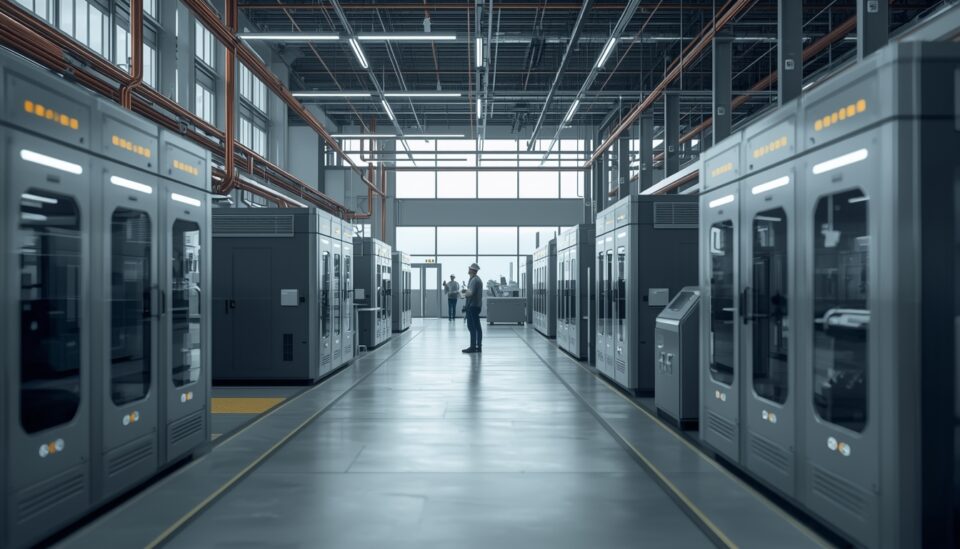
The convergence of artificial intelligence, robotics, and advanced electrical systems is reshaping the manufacturing landscape in 2026. What once seemed like futuristic concepts are now becoming operational realities on factory floors worldwide. For electrical engineers and automation professionals, this year marks a pivotal transition from experimental pilots to widespread commercial deployment of technologies that promise to transform how we design, power, and manage industrial facilities.
Physical AI Reaches Its Inflection Point
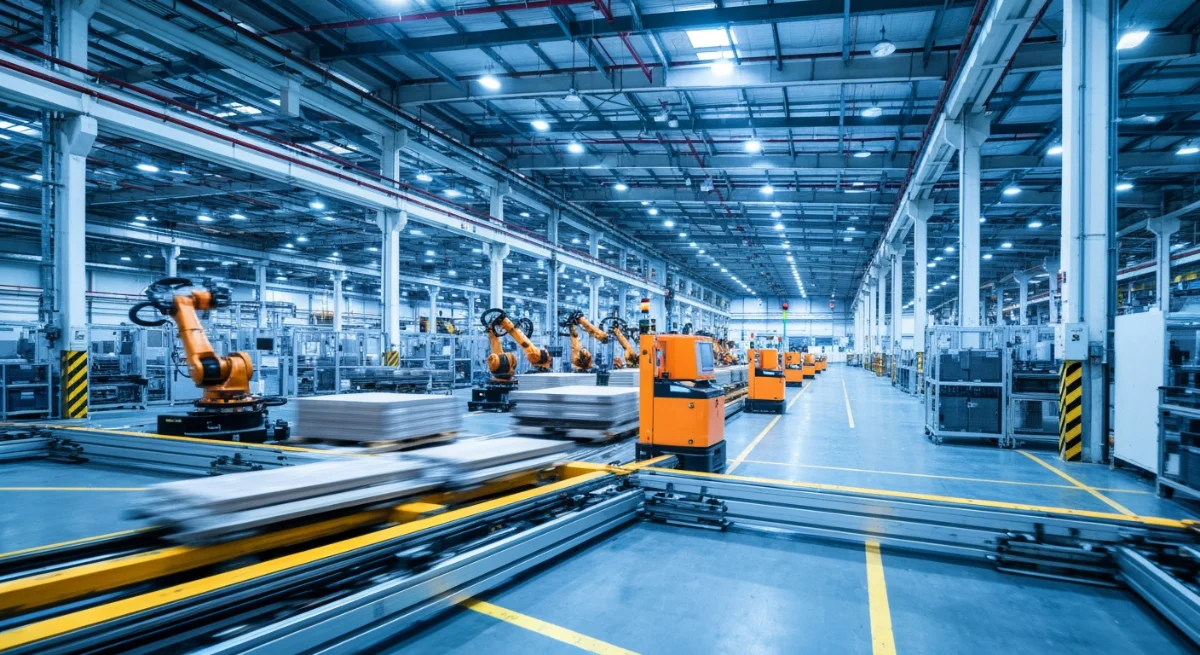
The robotics industry has entered what Nvidia CEO Jensen Huang calls “the ChatGPT moment for physical AI.” This isn’t hyperbole. Manufacturers are moving beyond traditional robotic arms performing repetitive tasks to deploying humanoid robots and autonomous systems capable of understanding their environment, reasoning through problems, and adapting to changing conditions in real time.
Companies like Hyundai Motor Group are already deploying Atlas humanoid robots in production settings, while automotive manufacturers including Audi and BMW are piloting similar systems within their operations. According to recent surveys, approximately 58% of global business leaders are currently using physical AI to some extent, with that number expected to reach 80% over the next two years. For manufacturers, this means robots that can handle variable tasks, navigate complex environments, and even work alongside humans without safety cages.
The implications for electrical engineering are significant. These advanced robotic systems require sophisticated power management, real-time control systems, and integration with existing plant infrastructure. Electrical engineers now find themselves designing power distribution networks that can support the dynamic loads of mobile autonomous systems while maintaining the reliability traditional fixed automation demands.
Software-Defined Automation Transforms Control Architecture
One of the most fundamental shifts occurring in 2026 is the move toward software-defined automation (SDA). This architectural evolution decouples control software from proprietary hardware, allowing manufacturers to run control logic on standardized computing platforms rather than being locked into vendor-specific controllers.
Major automation providers including Siemens, Rockwell Automation, and Schneider Electric are actively pushing SDA roadmaps. Siemens anchors its approach in three pillars: Industrial Edge as standardized software infrastructure, virtualized control runtimes (vPLC), and IT-like engineering workflows. Rockwell’s Logix Edge, targeted for release in late 2026, represents a similar philosophy with the Logix engine running as an isolated workload on industrial PCs.
For electrical engineers, this shift requires expanding skillsets beyond traditional control system design. Understanding cloud computing, containerization, and software development practices is becoming as important as knowing how to spec motor drives and switchgear. The boundary between IT and OT continues to blur, creating new opportunities for professionals who can bridge both domains.
AI-Enabled Predictive Intelligence Becomes Standard
Artificial intelligence in manufacturing has moved well beyond the hype cycle into practical applications delivering measurable results. In 2026, AI-powered systems are being deployed across multiple operational areas including predictive maintenance, quality inspection, production scheduling, and energy optimization.
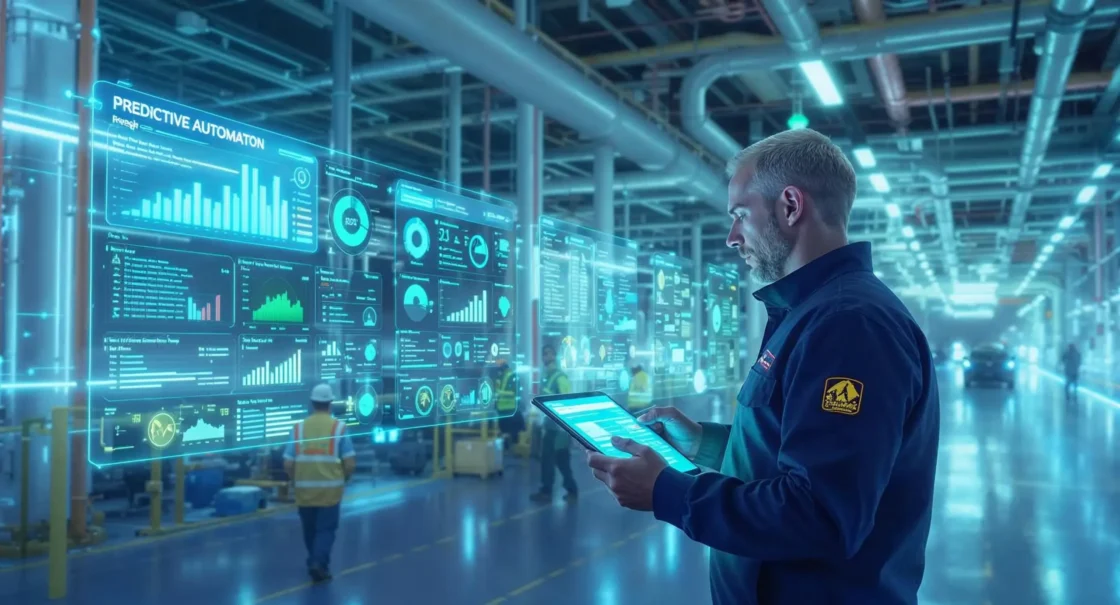
Manufacturers are leveraging machine vision combined with machine learning to handle quality control variations that traditional rule-based systems couldn’t address. AI-enabled predictive maintenance systems analyze equipment data to anticipate failures before they occur, allowing plants to schedule maintenance strategically rather than reactively. Some facilities are reporting downtime reductions of over 20% after implementing IoT sensor networks integrated with AI analytics platforms.
The electrical engineering implications extend to both power systems and control architecture. Predictive systems require extensive sensor networks, edge computing infrastructure, and communication protocols that can handle real-time data streams. Engineers are increasingly tasked with designing electrical systems that support not just the primary automation equipment, but also the extensive sensing and computing infrastructure that enables intelligent operations.
Electrical Infrastructure Modernization Accelerates
The traditional electrical grid is undergoing its most significant transformation since its creation. Smart grid technology, microgrids, and distributed energy resources (DERs) are reshaping how industrial facilities source, manage, and consume electrical power.
Smart grids use digital technology, sensors, and two-way communication to actively manage electricity distribution. The U.S. smart grid market is expected to reach $22 billion by 2029. For industrial facilities, this means real-time visibility into power consumption, dynamic load management, and the ability to automatically adjust operations during peak demand periods to reduce costs.
Microgrids are emerging as essential infrastructure for operational resilience. Rather than depending entirely on utility power, facilities are deploying localized power systems that can operate independently during grid disruptions. These typically combine on-site generation (solar, natural gas, or other sources) with battery storage systems to ensure continuous operation even during extended outages.
Electrical engineers working in industrial automation must now understand energy storage systems, power electronics for renewable integration, and sophisticated control systems that can seamlessly transition between grid and islanded operation. The traditional focus on motor control and distribution design now expands to include expertise in power quality, energy management systems, and renewable energy integration.
Wireless Power Transfer Enables True Mobility
An emerging trend that will significantly impact factory automation is the advancement of wireless power transfer (WPT) technology. Industrial applications are moving toward wireless charging for autonomous robots, drones, and mobile sensors, eliminating the productivity losses associated with battery swaps and charging downtime.
This technology relies on high-frequency circuits for resonant inductive and capacitive coupling, optimized electromagnetic fields, and sophisticated control systems to ensure both efficiency and safety. Electrical engineers are finding themselves at the forefront of designing these systems while ensuring compliance with IEEE, IEC, and FCC standards for electromagnetic emissions and safety.
The practical impact is substantial. Autonomous mobile robots can opportunistically charge while pausing at workstations, drones can recharge without human intervention, and sensor networks can operate indefinitely without battery replacement. This enables truly continuous autonomous operations that were previously limited by power source constraints.
Industry 5.0 Rebalances Human-Machine Collaboration
While Industry 4.0 emphasized hyper-connectivity and automation, 2026 is seeing the emergence of Industry 5.0 principles that reintroduce the human element into highly automated environments. The “Human Out Of The Loop” crisis that emerged from pure automation strategies is being addressed through systems that leverage both human creativity and machine precision.
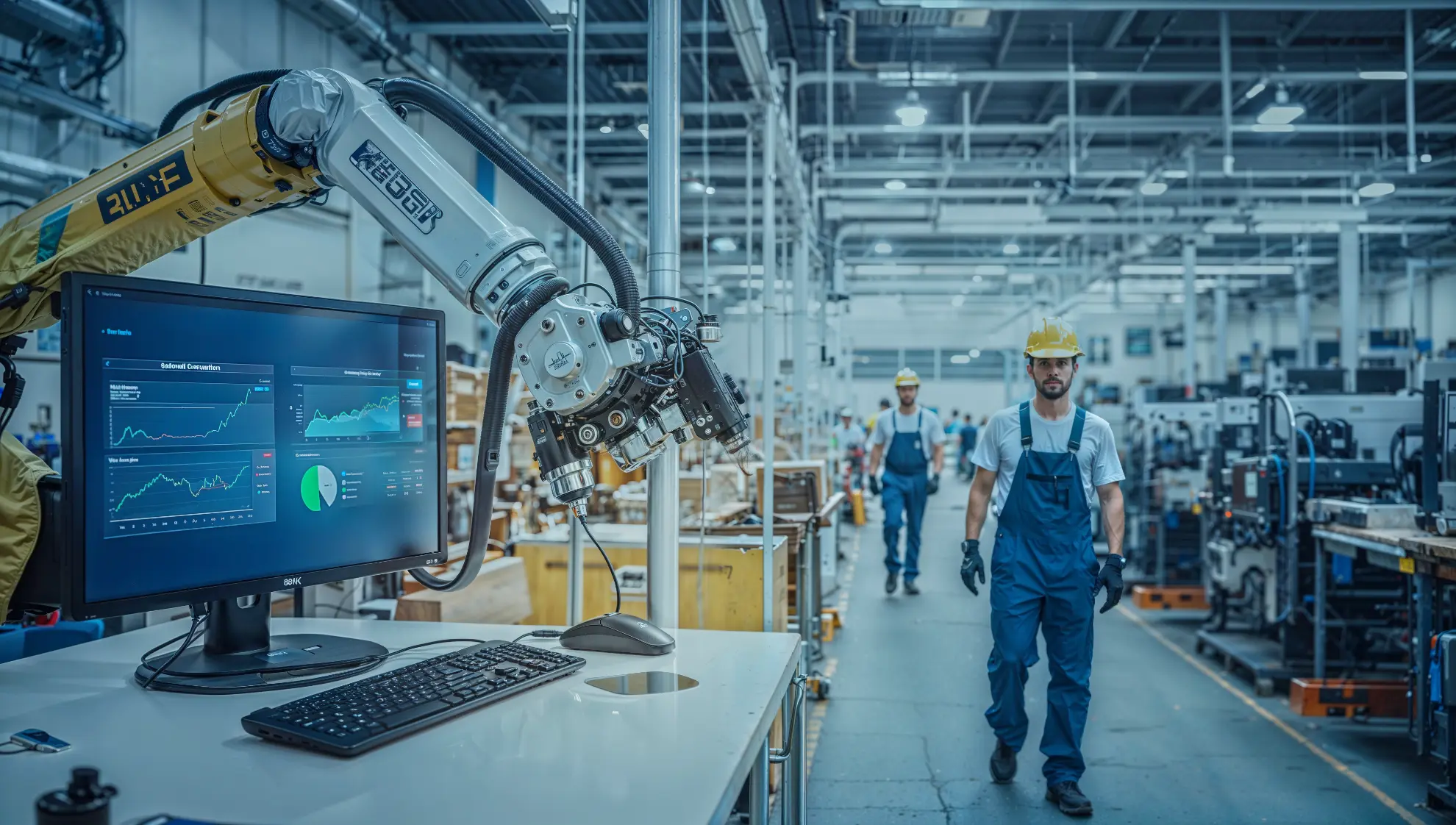
Collaborative robots (cobots) exemplify this trend. These systems work alongside humans without safety caging, automatically stopping when they detect potential danger. They’re designed to handle monotonous or physically demanding tasks while freeing human workers for more strategic, creative, and decision-making roles. For small and medium manufacturers, cobots offer accessible automation with lower initial costs and straightforward programming that doesn’t require dedicated automation engineers.
Electrical engineers supporting these human-centered automation strategies must design control systems with enhanced safety features, intuitive interfaces, and fail-safe mechanisms that protect workers while maintaining productivity. The focus shifts from pure efficiency metrics to creating flexible, adaptable systems that augment rather than replace human capabilities.
Cybersecurity Becomes Mission-Critical
As factories become more connected and dependent on digital systems, cybersecurity has evolved from an IT concern to an operational imperative. High-profile attacks in 2025, including the five-week production halt at Jaguar Land Rover resulting in $260 million in costs, have made manufacturers acutely aware of their vulnerability.
The convergence of IT and OT networks creates new attack surfaces. PLCs, HMIs, and other control systems that were previously isolated are now network-connected, making them potential targets. Approximately 59% of manufacturers in relevant sectors are now deploying AI tools to augment their cybersecurity capabilities, using machine learning to detect anomalous behavior and respond to threats in real-time.
Electrical engineers must now consider cybersecurity in their system designs. This includes implementing network segmentation, securing communication protocols, ensuring firmware updates can be safely deployed, and designing systems with defense-in-depth principles. The traditional focus on physical safety expands to include protection against digital threats that could disrupt operations or compromise proprietary information.
Workforce Transformation Drives Technology Adoption
A persistent theme throughout 2026 is the critical role of workforce development in successful automation deployment. The global shortage of skilled trades, particularly experienced technicians and electricians, continues to accelerate automation investments. However, successful implementation requires workers who can operate, maintain, and optimize these advanced systems.
Forward-thinking manufacturers are investing heavily in training programs. GE Aerospace Foundation, for example, committed $30 million over five years to increase the number of highly skilled U.S. workers by 10,000 starting in 2026. The focus is on developing multidisciplinary skills that combine traditional electrical and mechanical knowledge with data analytics, programming, and systems thinking.
For electrical engineering professionals, continuous learning is no longer optional. Understanding AI, machine learning, cloud computing, and software development practices complements traditional electrical expertise. The most valuable engineers are those who can translate between traditional electrical systems and modern digital technologies, designing integrated solutions that leverage both.
Looking Ahead
The factory automation and electrical engineering landscape of 2026 represents a fundamental shift from the past. Physical AI systems are moving from research labs to production floors. Software-defined architectures are decoupling control from hardware. Electrical infrastructure is becoming smarter, more distributed, and more resilient. Human-machine collaboration is being optimized rather than minimized.
For manufacturers, the question is no longer whether to adopt these technologies, but how quickly they can implement them while building the workforce capabilities needed to sustain them. For electrical engineers, the opportunity is unprecedented. Those who embrace the convergence of electrical systems, software, and artificial intelligence will find themselves at the center of the most significant industrial transformation since electrification itself.
The future of manufacturing is not just automated—it’s intelligent, adaptive, and increasingly powered by professionals who can navigate both the physical and digital realms of industrial systems. The tools and technologies emerging in 2026 are just the beginning of this transformation, setting the stage for even more profound changes in the years ahead.